FreshBet Licence and UK Regulatory Status
 Available in GB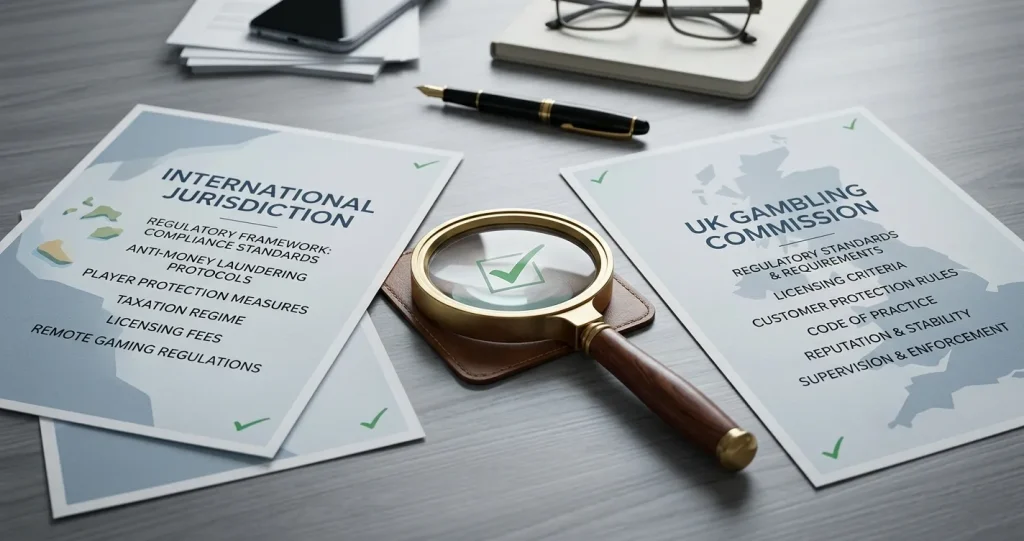
Licence and regulation
No FreshBet or Ryker B.V. Great Britain operating licence was verified in the UK Gambling Commission public register. FreshBet is operated by Ryker B.V., company number 154186, and the operator is associated with Curaçao licence OGL/2024/1800/1049. A Curaçao licence is not a UK Gambling Commission licence. For readers in England, Scotland and Wales, that distinction matters because remote operators serving consumers in Great Britain require the appropriate Gambling Commission licence. This page explains the licence evidence without turning it into a blanket claim about an individual player’s legal position or about whether FreshBet will currently accept a particular British account.
Table of Contents
- The FreshBet operator and Curaçao licence record
- What the UK Gambling Commission check means
- Why Great Britain uses a point-of-consumption licensing rule
- What licence status changes for a British reader
- Licence evidence does not settle current account acceptance
- Great Britain is not the whole United Kingdom for this rule
- How to verify a gambling licence before relying on it
- How to read the Curaçao certificate correctly
- The UK public register is the decisive GB licence source
- What a regulator check can and cannot prove
- Licence status should be checked by domain and operator name
- Why licence jurisdiction changes the protections a player can expect
- What FreshBet’s Curaçao licence does not replace in Great Britain
- FreshBet Registration and Account Access
The FreshBet operator and Curaçao licence record
The operator identified for FreshBet is Ryker B.V., company number 154186. Ryker B.V. is associated with Curaçao licence OGL/2024/1800/1049. The Curaçao Gaming Authority certificate portal shows Ryker B.V. and that licence number on current certificates for approved domains operated by the company, with the licence shown as active.
An independent register review dated 5 September 2026 identifies freshbet.com as an approved domain on the same Ryker B.V. licence. That supports the FreshBet-to-licence association used here. It does not establish permission to provide remote gambling to consumers in Great Britain, because that is a separate regulatory question.
What the UK Gambling Commission check means
The Gambling Commission says its public register contains the businesses and individuals it licenses, including licensed activities, domains and trading names supplied to it. The current register check did not verify a Great Britain operating licence for FreshBet or Ryker B.V. The correct conclusion is therefore narrow: no FreshBet/Ryker B.V. Great Britain operating licence was verified.
That wording is deliberately different from saying that FreshBet is “licensed in the UK” or that a Curaçao licence provides UKGC protections. Neither claim follows from the evidence. Readers who want the broader product assessment can return to the FreshBet Casino Review for UK Readers.
Why Great Britain uses a point-of-consumption licensing rule
The Gambling Commission’s current guidance says a remote gambling business needs a Commission licence when it provides gambling facilities to consumers in Great Britain, regardless of where the business itself is based. Its remote casino guidance applies the same principle to online casino games. This is the practical point-of-consumption rule that makes the customer’s Great Britain location relevant to operator licensing.
The legal framework is based on the Gambling Act 2005 as amended, including changes made by the Gambling (Licensing and Advertising) Act 2014. The 2014 changes brought overseas remote operators serving British consumers within the Commission licensing regime.
| Question | Evidence-led answer |
|---|---|
| Who operates FreshBet? | Ryker B.V., company number 154186. |
| What overseas licence is associated with the operator? | Curaçao licence OGL/2024/1800/1049. |
| Was a FreshBet/Ryker B.V. GB operating licence verified? | No local Great Britain licence was verified in the current UKGC register check. |
| Does a Curaçao licence replace a UKGC licence for serving Great Britain? | No. The jurisdictions and permissions are distinct. |
What licence status changes for a British reader
A UKGC licence is not just a badge. It places a business serving Great Britain inside the Commission’s licensing framework and the conditions that apply to its licensed activities. UKGC remote licensees must display their licensed status and link customers to the Commission record. When no local licence has been verified for a brand, readers should not assume that UKGC-specific protections or processes apply to that account.
This is especially relevant before creating or funding an account. The FreshBet Registration and Account Access guide covers account eligibility separately, while FreshBet Payments and Deposits explains payment categories without treating a payment option as evidence of regulatory eligibility.
Licence evidence does not settle current account acceptance
Licence status and website accessibility are not the same fact. A site can be technically reachable without that proving it is authorised to serve consumers in Great Britain, and a licence record alone does not prove what a particular sign-up flow will do today. Current public information does not settle GB account acceptance, so this page does not claim that FreshBet definitely accepts or definitely rejects every UK resident.
For the same reason, the presence of games or payment methods should not be used as a shortcut for the regulatory question. See FreshBet Games and Casino Library for the product side of the review.
Great Britain is not the whole United Kingdom for this rule
This guide uses “United Kingdom” as the broad geographic label, but the Gambling Commission’s core Gambling Act jurisdiction is Great Britain: England, Scotland and Wales. The Commission’s May 2026 guidance states that it does not regulate gambling activity in Northern Ireland under the same framework, although particular remote advertising and equipment situations can still create UKGC licensing requirements.
Northern Ireland therefore should not be folded into a simple “UKGC covers the entire UK identically” statement. Its gambling framework is distinct, and this guide uses Great Britain when discussing the point-of-consumption operating-licence requirement.
How to verify a gambling licence before relying on it
- Identify the legal operator, not only the casino brand name.
- Check the regulator’s own public register or certificate service where available.
- Match the company, licence number, trading name or domain rather than relying on a logo or footer alone.
- Check that the licence is relevant to the jurisdiction in which the gambling service is being provided.
- Do not infer Great Britain authorisation from an overseas licence.
For FreshBet, the useful split is clear: Ryker B.V.’s Curaçao licence association can be checked as one fact, while Great Britain authorisation must be checked separately with the Gambling Commission.
How to read the Curaçao certificate correctly
The Curaçao Gaming Authority certificate for freshbet.com identifies Ryker B.V. and licence number OGL/2024/1800/1049. The current certificate page describes the status as Active. That is stronger evidence than a badge or licence number copied onto a review page because the regulator-hosted certificate links the domain, operator and licence record in one place.
Even so, a Curaçao licence answers a Curaçao regulatory question. It does not become a Great Britain operating licence merely because the website can be viewed from Britain or supports GBP. Jurisdiction-specific authorisation must be checked with the regulator that governs the market in question.
The UK public register is the decisive GB licence source
The UK Gambling Commission’s business register is the primary source for businesses, trading names and domains licensed by the Commission. The register was updated on 10 September 2026, immediately before this review was refreshed. Searches for FreshBet and Ryker B.V. did not produce a matching Great Britain operating-licence record. That is why this page does not describe FreshBet as UKGC licensed.
The Commission also states that an overseas business needs its licence if it provides remote gambling facilities to consumers in Great Britain. The requirement is based on the market being served, not simply on where the operator is incorporated. This point-of-consumption model is why a foreign licence and a GB operating licence cannot be treated as interchangeable.
What a regulator check can and cannot prove
A regulator record can establish who holds a licence, its status and the activities or domains associated with it. It cannot by itself prove that every current customer is eligible under the operator’s terms, that every advertised promotion is available, or that a particular payment method will appear in an account. Those are separate contractual and product questions.
Conversely, a functioning registration page, a GBP wallet option or a visible UK-facing review page cannot replace a regulator entry. When evidence conflicts, give the regulator record priority for the licence question and the operator’s current terms priority for account eligibility. Keeping those sources in their proper roles prevents a marketing claim from being mistaken for regulatory authorisation.
Licence status should be checked by domain and operator name
A brand name alone is not always enough for a regulator search because licences are commonly held by the legal operating company. A robust check therefore uses the brand, the operator name and the domain shown on the service. For FreshBet, the Curaçao certificate connects freshbet.com with Ryker B.V. and the stated licence number, while the Great Britain check should look for the same operator or relevant trading and domain names in the UK Gambling Commission register.
This method also reduces the risk of relying on lookalike sites. If a page claims to be an official FreshBet domain, compare its operator and licence statement with the regulator-hosted certificate rather than trusting the page title alone. A copied licence number on an unrelated website does not establish that the domain is covered by that licence.
Why licence jurisdiction changes the protections a player can expect
A gambling licence is not merely a badge showing that an operator has been approved somewhere. The licensing jurisdiction determines the rules the operator must follow for that market, the regulator that can take enforcement action, and the complaint or consumer-protection framework connected with the licence. This is why a Curaçao licence and a Great Britain operating licence answer different questions even when both relate to the same website.
For British consumers, the UK Gambling Commission framework includes requirements covering customer identity verification, payment restrictions, game rules, responsible gambling controls and complaints. Those protections attach to operators licensed for the GB market. A Curaçao certificate can establish that FreshBet is operated under a Curaçao licence, but it should not be used to imply that the UKGC framework applies to the account.
This distinction is also useful when reading affiliate or review pages. Statements such as “licensed casino” can be technically true while leaving out the jurisdiction that matters to the reader. Always ask the next question: licensed by whom, for which operator, for which domain and for which market? Only then does the licence statement become meaningful.
Recheck the regulator record whenever the operator, domain or licence wording changes, because those changes can alter which authorisation actually applies.
Jurisdiction remains the key distinction.
For GB readers, that separation should remain explicit.
What FreshBet’s Curaçao licence does not replace in Great Britain
FreshBet’s operator is associated with a current Curaçao licence, but that does not replace the separate Gambling Commission licence required for an operator serving consumers in Great Britain. No FreshBet or Ryker B.V. Great Britain operating licence was verified in the UK Gambling Commission public register. That is the most important regulatory distinction for readers in England, Scotland and Wales. It should be considered before account registration, deposits or relying on protections that are specific to the GB licensed market.